
The dust has settled but the energy from the Databricks Data + AI Summit 2026 is still reverberating across the tech world! It was an absolutely legendary gathering where the global data and AI community didn’t just talk about the future they actively built it.
The scale of what was accomplished over those few days was historic breaking records across the board:
100K Total Attendees: A powerhouse community of data minds, including 32,000 innovators packing the venue in person, with the rest of the global community tuning in remotely from every time zone.
174+ Countries Represented: A truly global phenomenon, uniting diverse perspectives and top talent from every corner of the world.
240+ Exhibitors: A large ecosystem showcase featuring the industry-leading partners and technologies shaping tomorrow’s data landscape.
The summit may be over but the momentum is just getting started. The connections made, skills learned and breakthroughs shared have officially set the trajectory for the next era of data and AI!
Let’s start with the Unity Catalog
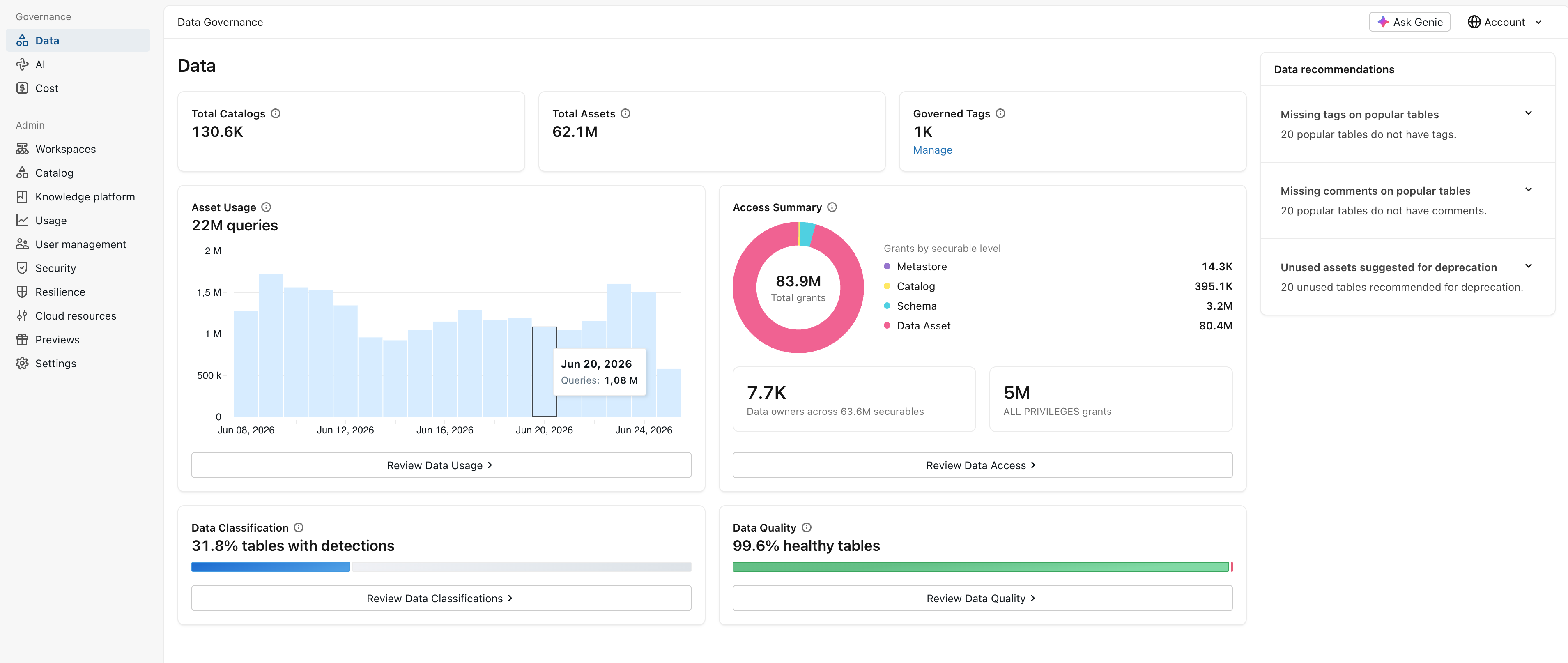
Governance Hub is a centralized command center for data stewards and admins to govern Databricks. You can monitor the data, AI, cost and Performance from a single UI
Attribute Based Access Controls are GA for row filtering and column masking as well as Data Classification and Governed Tags to help you protect you precious assets.
ABAC are getting extra features:
You can define the attribute once to automatically grant execute permissions across all matching models.
You are going to be able to build access rules using live user properties synced from the IDP.
You are going to be able to leverage request context. Whether access originates from an agent or a workspace or application to securely handle application.
You are going to have the opportunity to carry governed tags from sources tables and columns to downstream tables and views as data is transformed
RBAC is coming soon: you are going to be able to complements Databricks’ inheritance-based identity and permission model by enabling you to define groups that behave like roles. When you assume a role you act like the role and all the actions including data access are authorized as that role
With the rise of the LLM the CONTEXT is now more important than ever
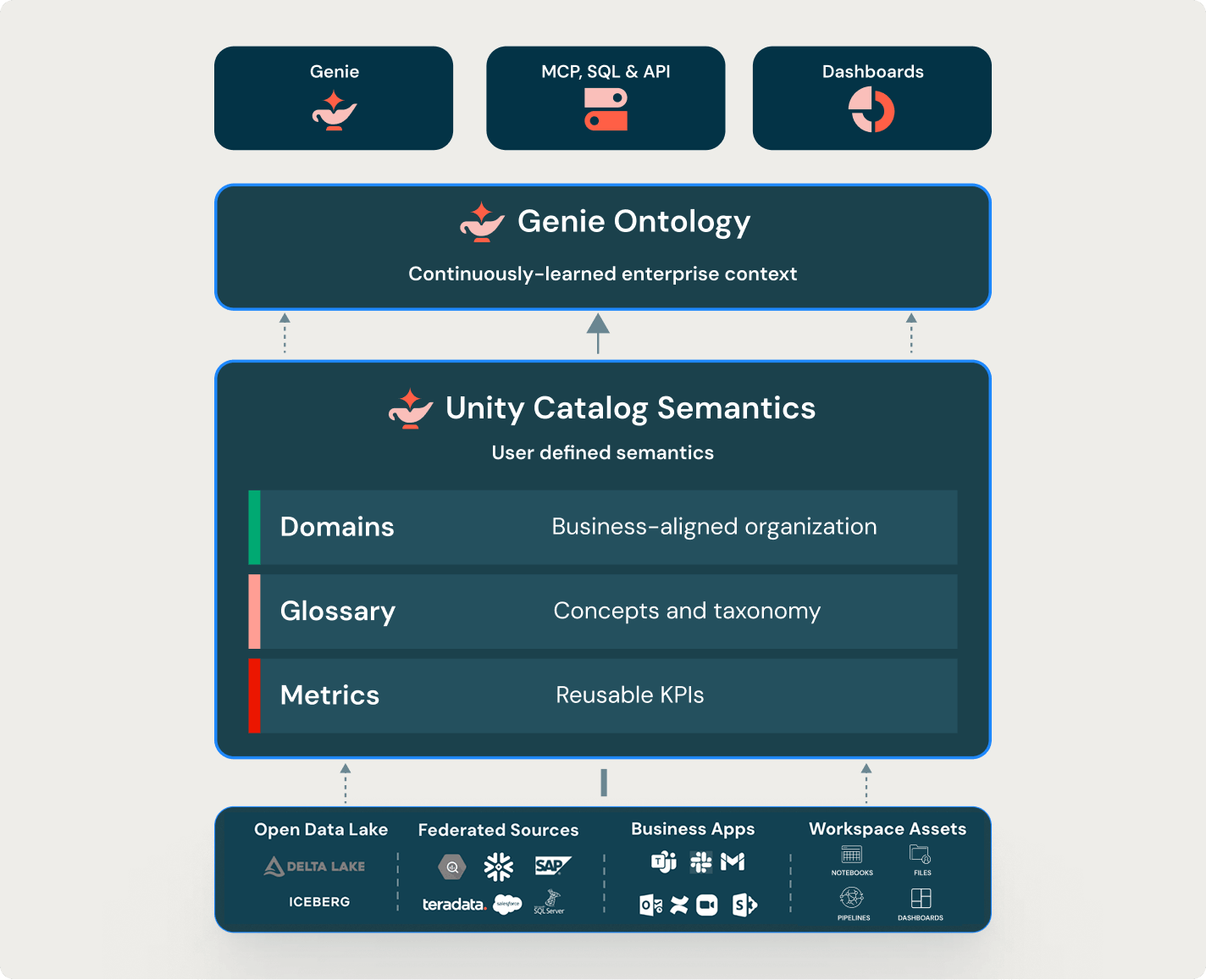
UC Metrics are very important as they provide agents and data citizens with a single resources to compute KPIs organized by domain and accessible via API, MCP and SQL.
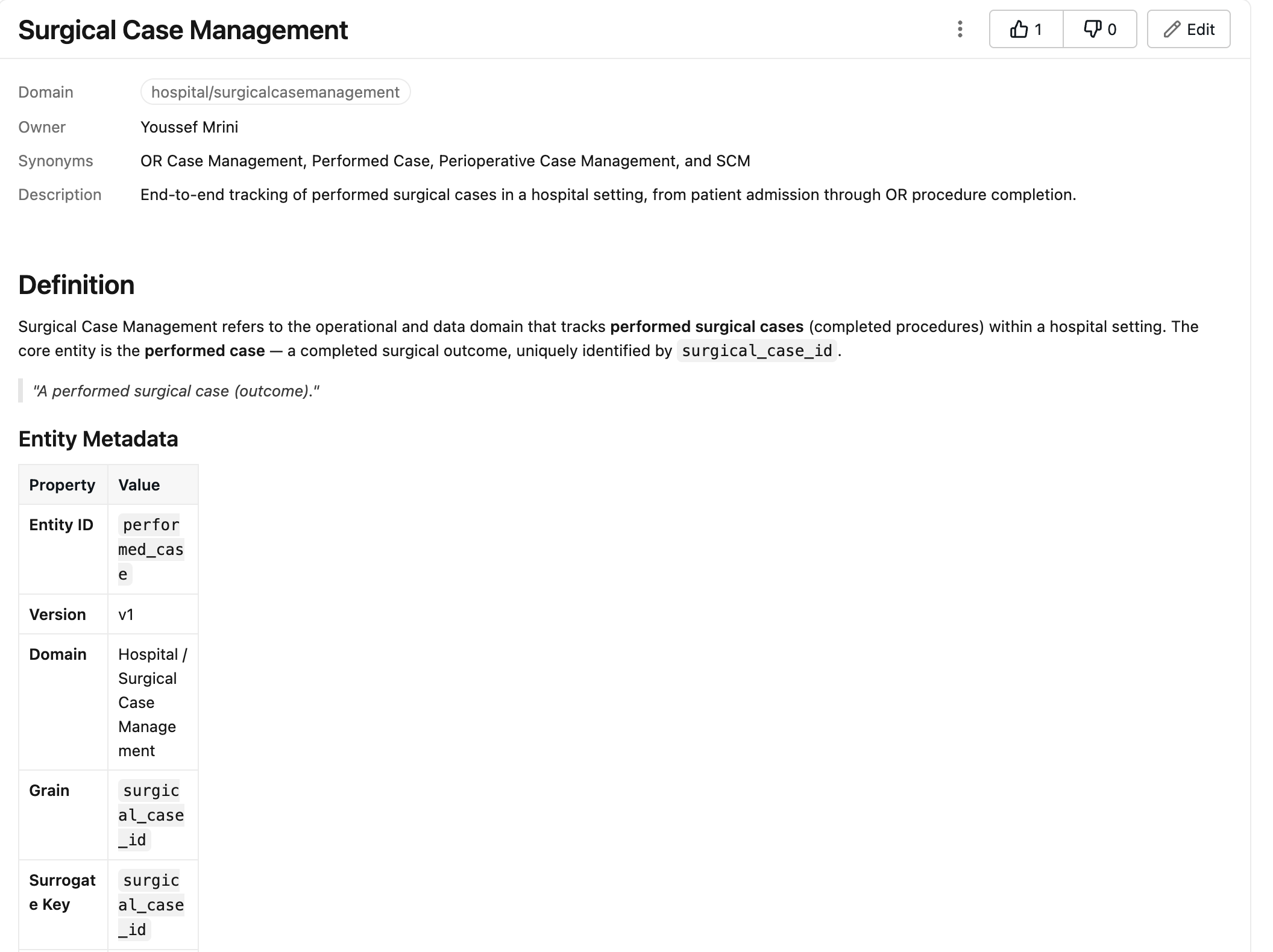
In addition to UC metrics, you can now define a page in Glossary. It lets you define authoritative concepts and taxonomies that helps agent and people understand your business. You can connect many pages to each others, capturing the relationships.
Genie Code is here to help you draft Glossary pages, suggests improvements and more importantly flags definitions that drift from how the data is actually used.
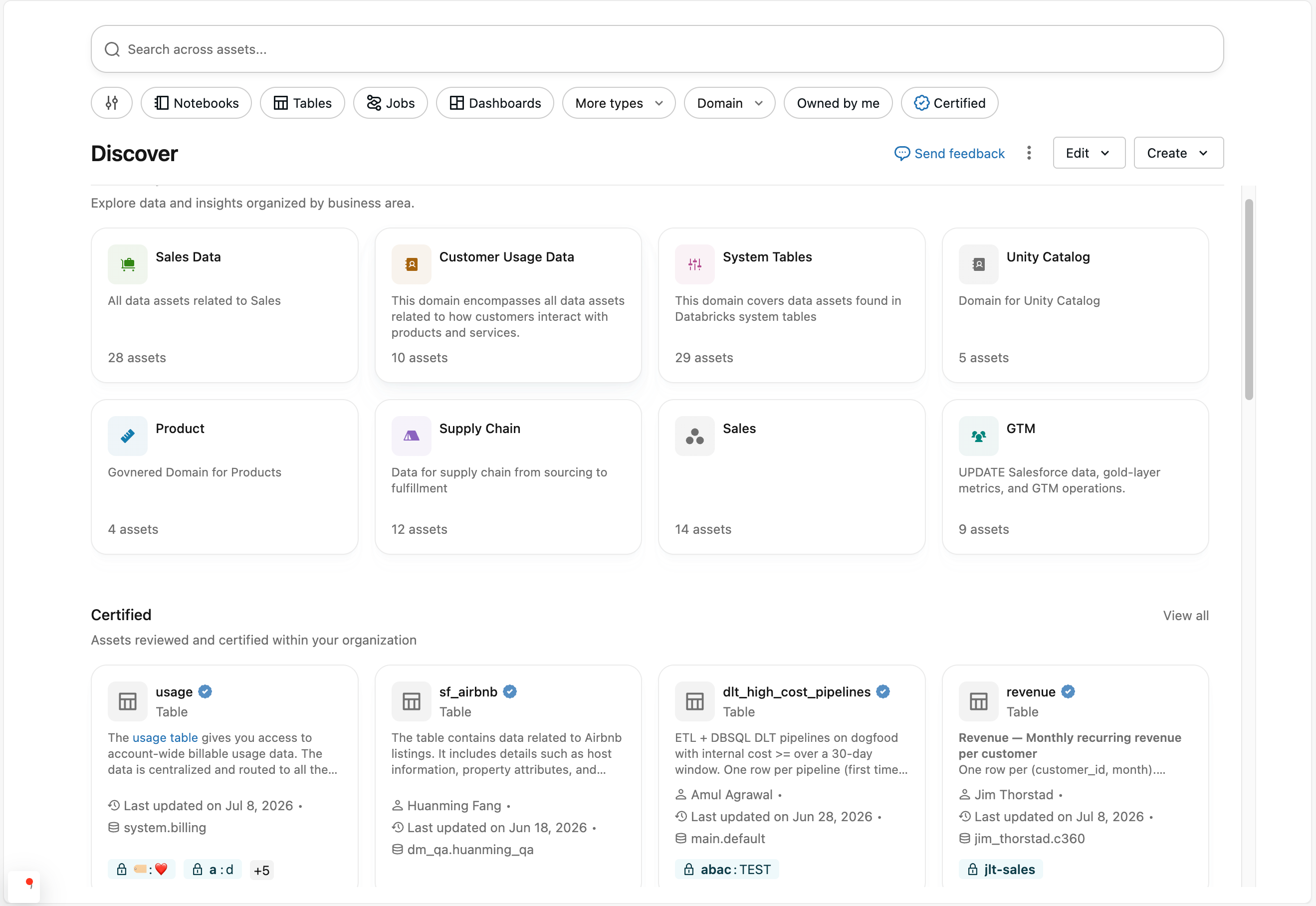
Domains are also as important as Glossary and UC Metrics, you can organize your Data and AI assets into categories that fits your business needs giving agents and people the relevant context needed.
Domains, Glossary and UC Metrics are the foundations that feeds Genie Ontology which is a continuously learned entreprise context layer in Databricks.
The Lineage Experience
Unity Catalog offers an amazing lineage experience. In additional to the automatic inferred lineage you can now extend lineage in UC to assets beyond Databricks by registering upstream source systems and downstream BI reports so a single lineage graph spans your full data flow end to end.
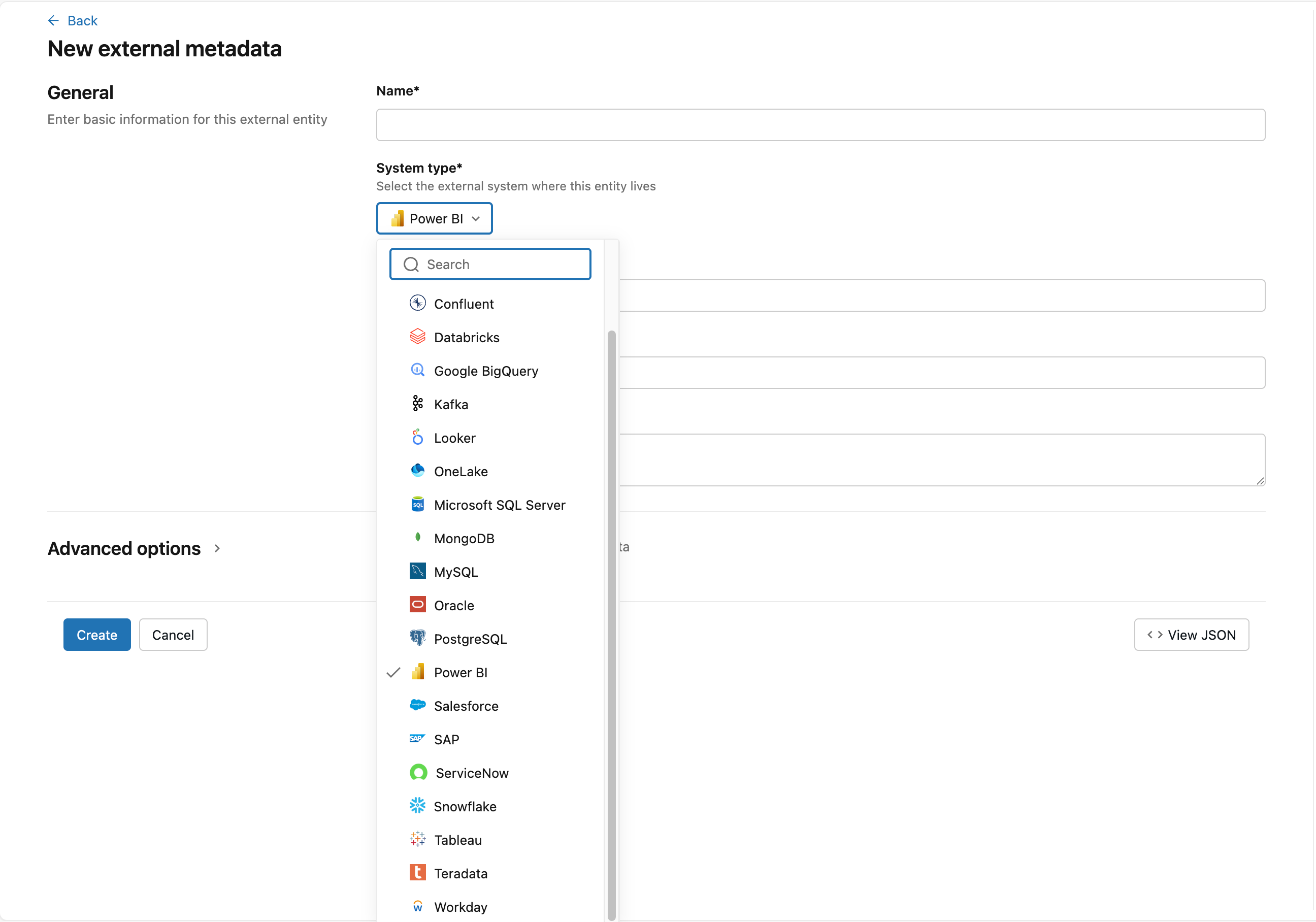
Unity Catalog offers a wide variety of features one of them is table insights where you can see table usage, frequent joined tables, frequent notebooks, dashboards, queries in addition to that you get to see column level popularity from the table’s overview. This also feed Genie Ontology by giving a sharper sense of which columns matter most when reasoning.
CHOICE: choose the open infrastructure that suits your agentic era
Your infrastructure has to be flexible and can run wherever capacity exists that’s why Unity Catalog is now expanding to govern access across your entire footprint spanning accounts, regions and clouds. With the 4 level namespace metastore.catalog.schema.table gives every asset a single address across the entire realm with a unique unified experience. You are going to be able to govern your assets cross-cloud and cross-account. In addition you are getting the Managed disaster recovery feature to support the resilience for the mission critical workloads. It replicate the critical parts of your Databricks deployment to a secondary region and failover to it within minutes of a disaster.
Unity Catalog is the most advanced and open Catalog on the market offering a cross-format and cross-platform interoperability.
You can read and write from external engines like Apache Spark or Apache Flink to Unity Catalog Managed Delta Tables
A new file type lets managed tables natively govern unstructured data like images, PDFs, audio, and video.
You have a geospatial support for Delta lake and Apache Iceberg
A Data and AI platform is only good when it allows you to do open sharing by offering a wide collaboration ecosystem. Databricks pioneered by Open sourcing Delta Sharing few years ago and now Databricks is announcing the next evolution of Delta Sharing: OpenSharing which introduces the first Open vendor neutral protocol for securely sharing AI assets such as Skills, AI Models and unstructured data.
You can use SecureConnect to enable secure connectivity across clouds with Zero-copy data sharing and a Multi-model collaboration by enabling the collaboration on AI assets and applications as well as Genie Sharing.
Building an Open Ecosystem for AI Governance with Unity AI Gateway
Visibility is an important aspect of how the AI is used in addition to being able to control what agents can access to protect entreprises from AI threats.
Unity AI Gateway is Databricks solution for entreprise AI. Built on the foundation of Unity Catalog. It’s extending governance beyond Data and AI assets to the runtime interactions between models, agents, MCP Servers, Skills… Unity AI Gateway is the FEATURE to monitor activities, manage spend and monitor activity across frameworks and providers
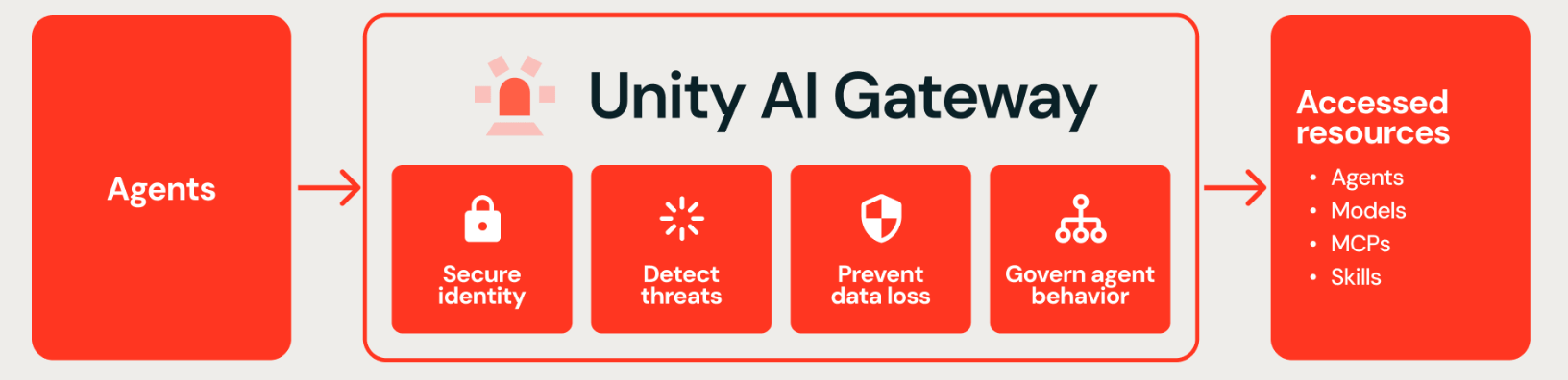
Agent registry: Discover all agents including external agents
Contextual policies: Admin can allow, deny or require approval for actions like pushing code or writing documents
Budgets: It gives you full control over your organization’s AI spend across all models from the coding agents to agent serving your customers…
Smart routing: Cross provider, cloud fallbacks and traffic splitting
Agent Tracing: Analyze coding logs to spot bad practices and integrate with Lakewatch for alerts and monitoring
Governed Vibe Coding for Entreprise Apps on Databricks
Apps are growing massively as well as the usage of coding agents, but without context and control, “vibe coding” hits a wall in the enterprise.
Databricks Apps active deployment has nearly doubled and weekly users have tripled, fueled by non-technical teams using coding agents to build apps in hours. However, speed isn't enough for corporate environments. For wide impact, enterprise apps must be grounded in real business data (context) and strictly managed for compliance and safety (control).
To solve this, Databricks introduced three key capabilities at the Data + AI Summit 2026 to bring enterprise-grade context and control to Databricks Apps:
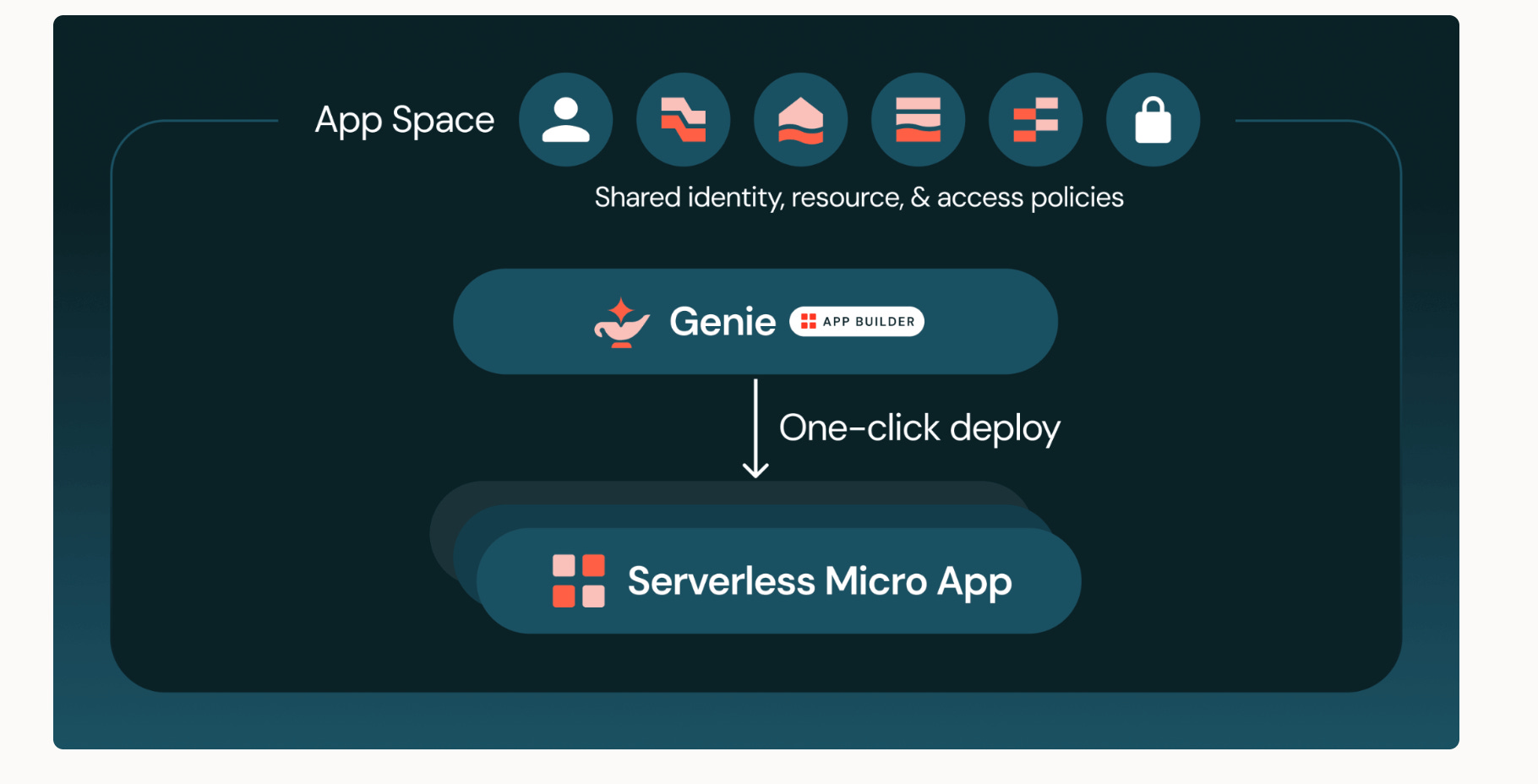
App Spaces: A new governance boundary designed to manage resources, access control, and security policies across groups of applications.
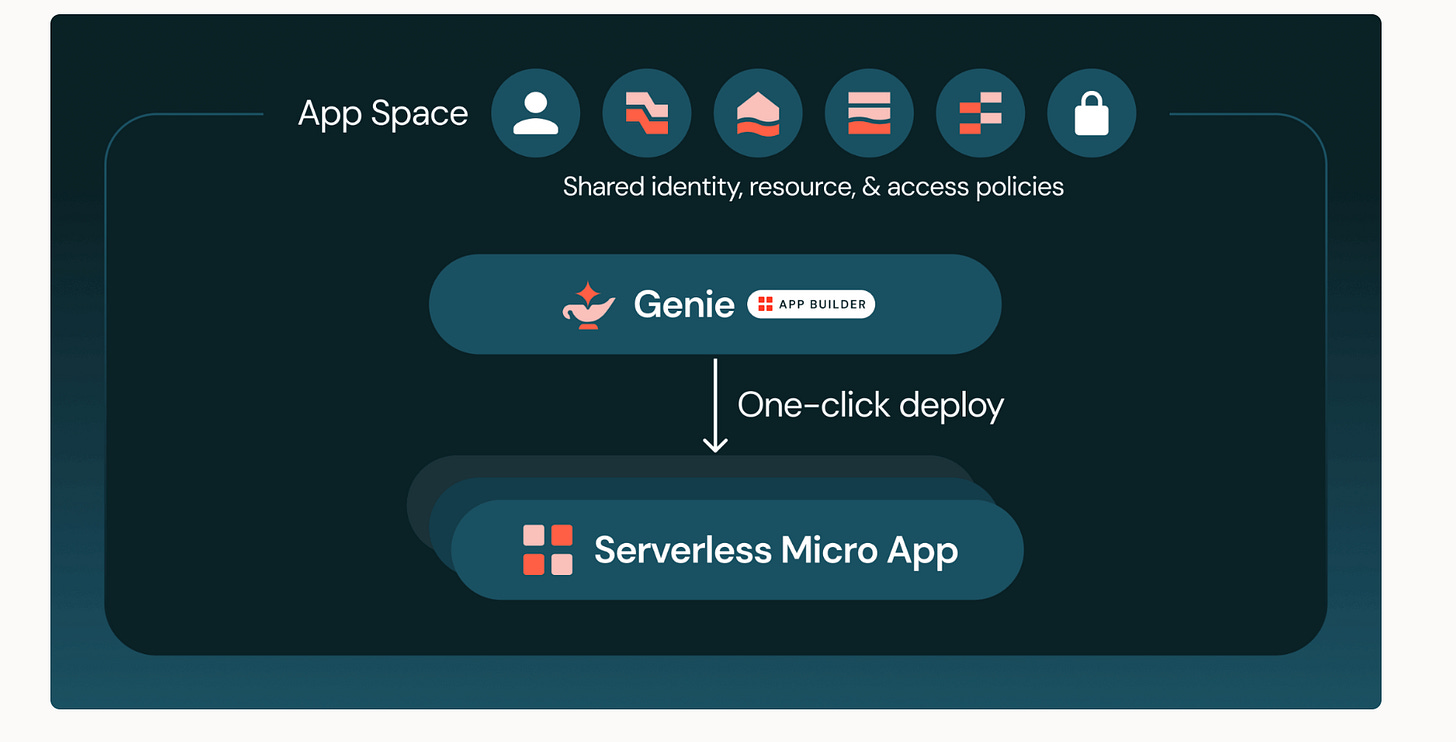
Genie App Builder: A specialized AI authoring tool built with native awareness of an organization’s specific data assets, workspace context, and Unity Catalog semantics.
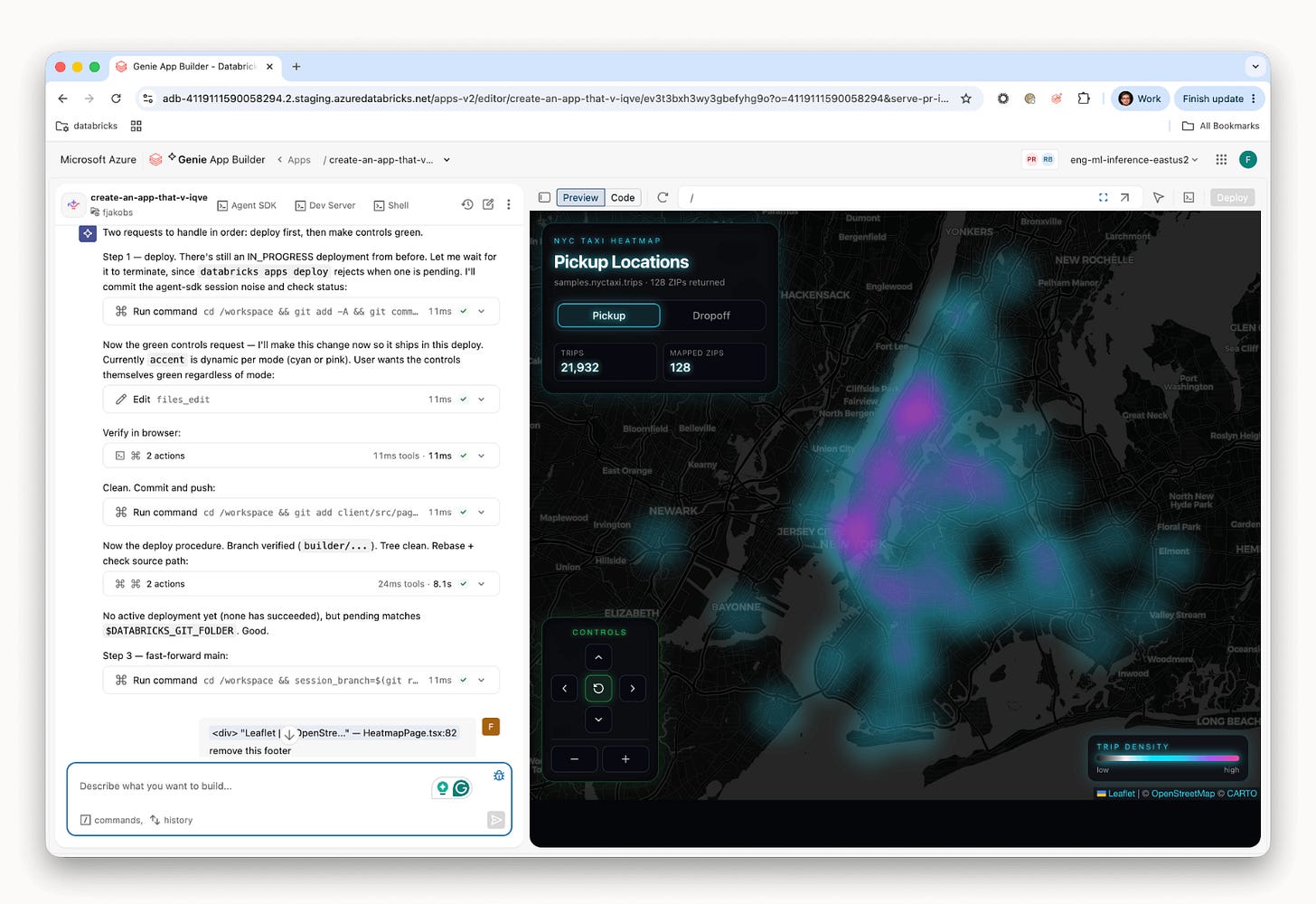
Serverless Micro Apps: A new class of applications that scale up instantly when needed and scale down to zero when idle, allowing companies to maintain a massive app portfolio without the burden of always-on infrastructure costs.
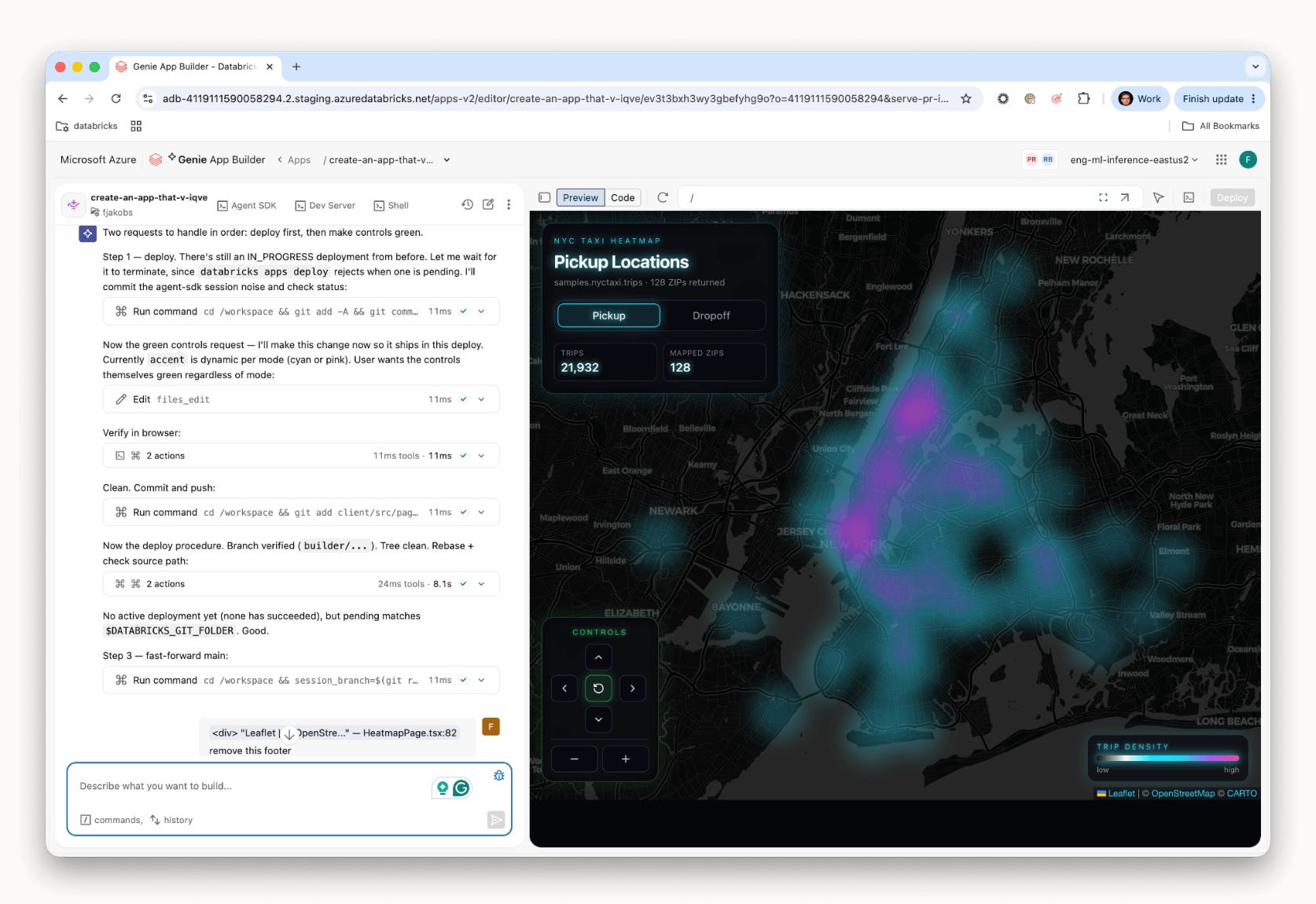
Databricks is accelerating its shift toward AI-native data and ML workflows, bringing agentic intelligence to every stage of the development lifecycle. At the core of this evolution is Genie Code, an AI partner that helps data and ML teams build, debug and improve systems faster directly within the platform.
What about Genie ?
Databricks Genie products have grown over 10x in the past year and are used by 90% of Databricks customers to build models, debug pipelines, and analyze data faster.
Databricks is expanding Genie Code to support more complex, autonomous and AI-native workflows with three major updates:
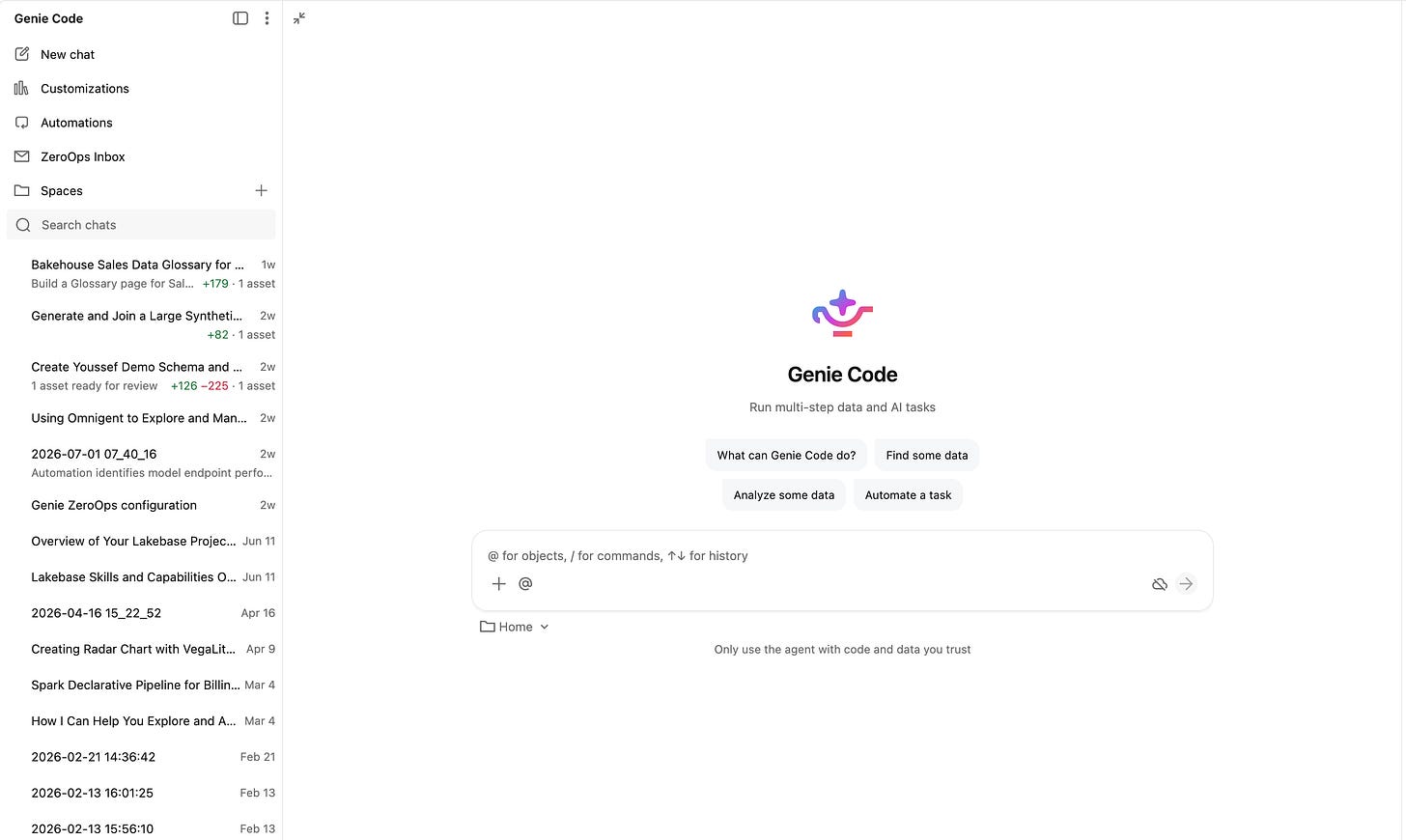
Full-Page Command Center: Moving beyond a small sidebar, teams can now use a dedicated, full-page experience to manage multiple concurrent threads, track progress across different assets (notebooks, SQL, pipelines) and seamlessly run parallel tasks without losing context
.
Agentic ML Engineering: Built directly into the existing agent, Genie Code now acts as a specialist for production machine learning. It integrates natively with MLflow, Model Serving and AI Runtime compute to write features, optimize GPU utilization, and debug infrastructure. It uses Genie Ontology to learn your team’s specific business metrics and past experiments rather than relying on generic defaults.
Scheduled Tasks & ZeroOps: Moving from interactive chat to autonomous work, users can now schedule Genie Code to run prompts overnight such as summarizing pipeline runs, reviewing model drift, or analyzing dashboard metric changes so results are ready for review the next morning. This pairs with Genie ZeroOps to extend agentic automation into live production operations and fixes.
Part 2 is about Lakehouse // RT, LTAP, ZeroOps and Omnigent. Coming soon
Don’t forget to check out the NextGenLakehouse Website, Instagram, Tiktok, X and Youtube